
The Solar System: Uranus, Neptune, and Pluto
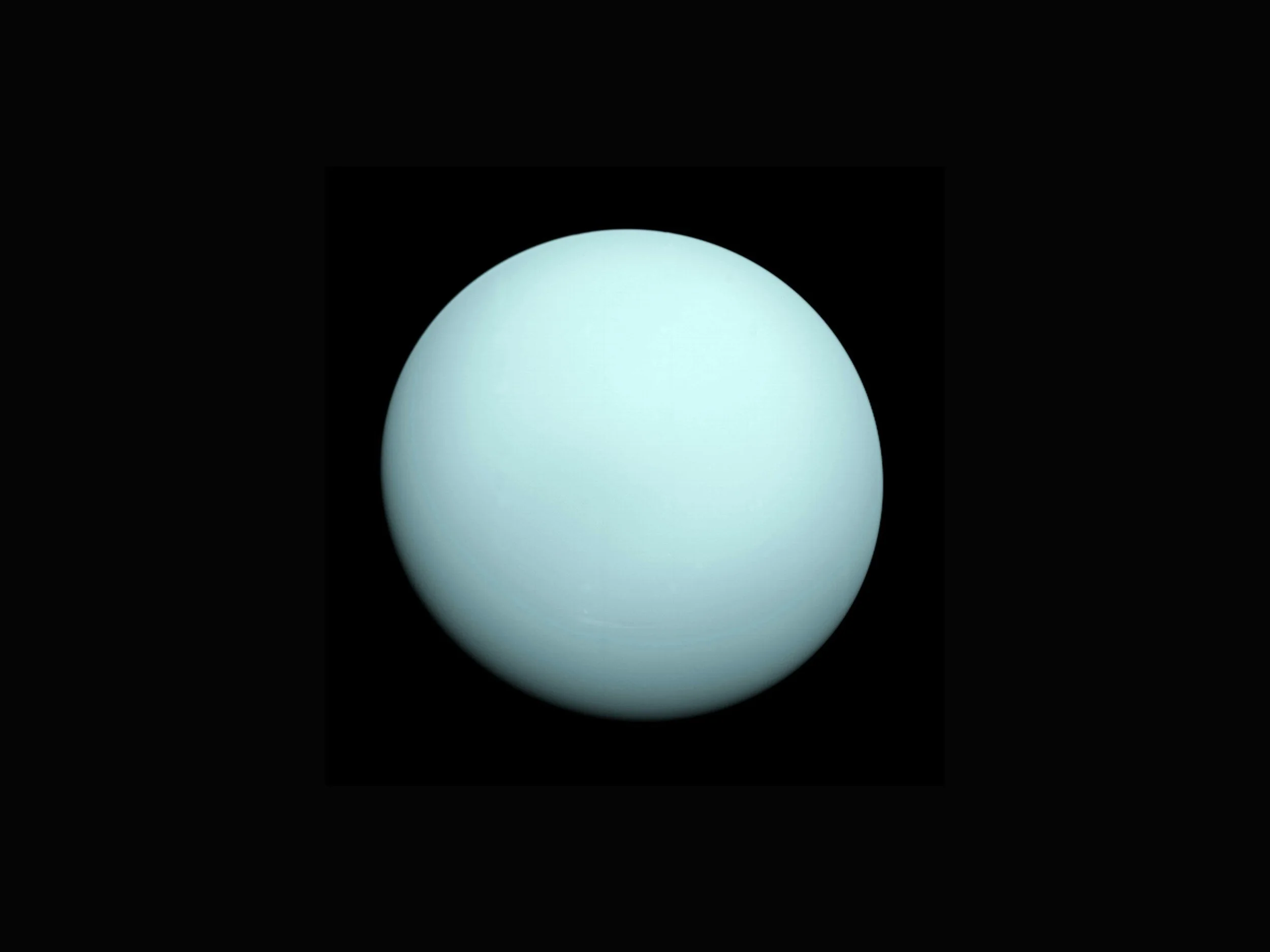
Uranus
Orbital characteristics:
Distance from star: 2.87 billion kilometres (19.19 astronomical units)
Orbital period: 84 years
Natural satellites: 5 major (Miranda, Ariel, Umbriel, Titania, Oberon), 23 minor
Physical characteristics:
Type: Cold ringed ice giant
Mass: 14.43 Earth masses (0.045 Jupiter masses)
Radius: 25,559 kilometres (4 Earth radii)
Average temperature: 76 K (-197.2 °C) at 1 bar atmospheric pressure
Habitability: Uninhabitable
Societal:
Discovered: 1781
Colonised: 15 January 2118
Population: 1,000-2,000 (moon system, semi-permanent only)
The cyan ice giant of Uranus is a 120-day journey from Earth with standard fusion torch engines, making any economic exploitation or tourism completely impractical. The World Union Department of Communications and Transport maintains a number of fast transports that cut this journey to forty days, but the small size and great expense of these ships means that the human presence around Uranus is still only semi-permanent. It was only in 2118 that the World Union established Herschel Station in orbit of the largest Uranian moon Titania. The population of Uranus’ moons varies between one and two thousand depending on the time of year.
With the lowest escape velocity of the four giant planets, Uranus has been studied as a site for atmospheric mining. Fusion fuels produced from Uranus’ hydrogen and helium-3, as well as fertilisers made from its nitrogen and ammonia, may one day support the colonisation of the Outer Solar System, though substantial improvements in the performance of fusion torch engines will be required before this can be achieved.
Titania
Orbital characteristics:
Distance from primary: 435,910 kilometres
Orbital period: 8.706 days
Space stations: 1 (Herschel Station)
Physical characteristics:
Type: Cold icy airless moon
Mass: 3.4550×10²¹ kilograms
Radius: 788.4 kilometres (0.124 Earth radii)
Average temperature: 70 K (-203.15°C)
Habitability: Uninhabitable
Societal:
Discovered: 1787
Colonised: 15 January 2118
Population: 1,000-2,000 (semi-permanent only)
Capital: George Base
Uranus’ largest moon, Titania is orbited by the World Union Astrographic Service’s Herschel Station, which is the centre for the exploration of Uranus’ other moons and ring system. On Titania’s surface, at the top of the Messina Chasmata, is George Base, the World Union’s most distant surface facility. George Base supports geological studies of Titania, particularly seeking to understand the moon’s dramatic topography: a combination of early resurfacing and expansion later in its formation has produced massive canyons and escarpments across Titania’s surface. A handful of firms have broached the possibility of Titania’s canyons becoming extreme tourism destinations for super-wealthy guests, though the Astrographic Service has refused all such offers.
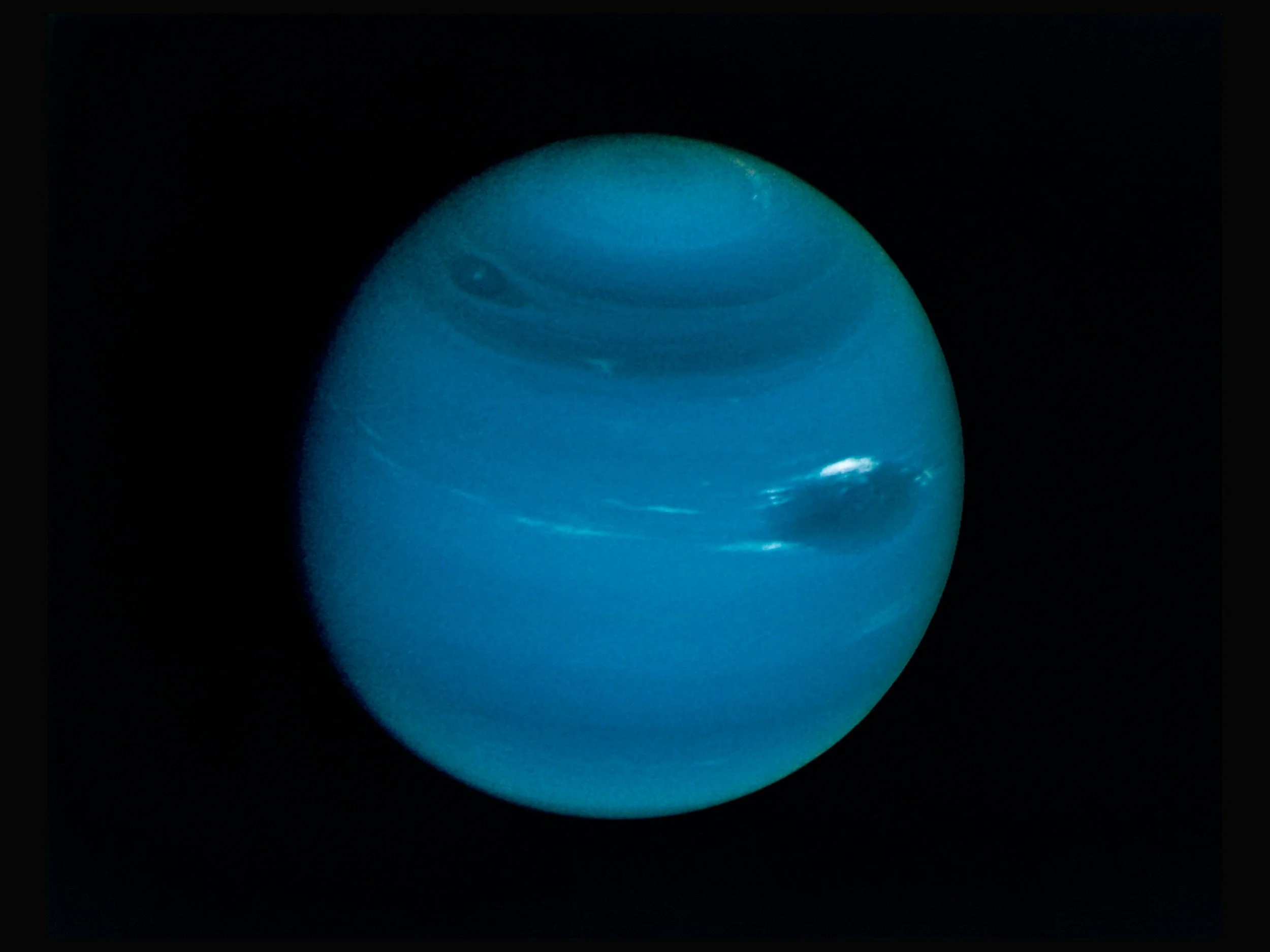
Neptune
Orbital characteristics:
Distance from star: 4.5 billion kilometres (30.07 astronomical units)
Orbital period: 164 years
Natural satellites: 16
Physical characteristics:
Type: Cold ice giant
Mass: 17.14 Earth masses (0.053 Jupiter masses)
Radius: 24,764 kilometres (3.883 Earth radii)
Average temperature: 72 K (-201 °C) at 1 bar atmospheric pressure
Habitability: Uninhabitable
Societal:
Discovered: 1846
Colonised: 7 October 2118
Population: 500-700 (around Triton)
158 days from Earth with standard torch engines and still a fifty-day journey by fast transport, the blue ice giant Neptune is even less accessible than Uranus. Fast transports must make use of drop tanks to cover the distance. Neptune’s population varies from 500 to 700, almost all scientific personnel based aboard Poseidon Station in orbit of the largest moon Triton.
Like Uranus, Neptune has been surveyed for mining. However, the planet’s intense winds (up to 2,100 kilometres per hour, the fastest in the Solar System) mean that mining Neptune’s atmosphere is almost certainly commercially unviable.
Triton
Orbital characteristics:
Distance from primary: 354,759 kilometres
Orbital period: 5.876 days
Space stations: 1 (Poseidon Station)
Physical characteristics:
Type: Cold icy nitrogen moon
Mass: 2.138×10²² kg
Radius: 1,353.4 kilometres (0.212 Earth radii)
Average temperature: 38 K (-235.15 °C)
Habitability: Uninhabitable
Societal:
Discovered: 1846
Colonised: 7 October 2120 (semi-permanent only)
Population: 500-700 (orbital only, no permanent surface population)
Triton is Neptune’s largest moon, and the largest in the Solar System to orbit its primary in a retrograde orbit. This and its highly-inclined orbit mean that Triton was long-suspected of being a Kuiper Belt object that was captured by Neptune billions of years ago. This was confirmed by geological studies after Poseidon Station was established in orbit of Triton in 2120. Poseidon Station is almost completely self-sufficient, operating a small fleet of ISRU drones to extract fuel and water from Triton’s surface owing to the high likelihood of delays in resupply.
Highly geologically active, Triton exhibits spectacular cryovolcanism and nitrogen geysers, which provide valuable opportunities to study the formation of trans-Neptunian objects. Triton’s thick deposits of nitrogen ice have been studied as a more viable alternative for commercial exploitation than Neptune’s atmosphere, though as with Uranus, business interest in utilising these resources is for now virtually non-existent.
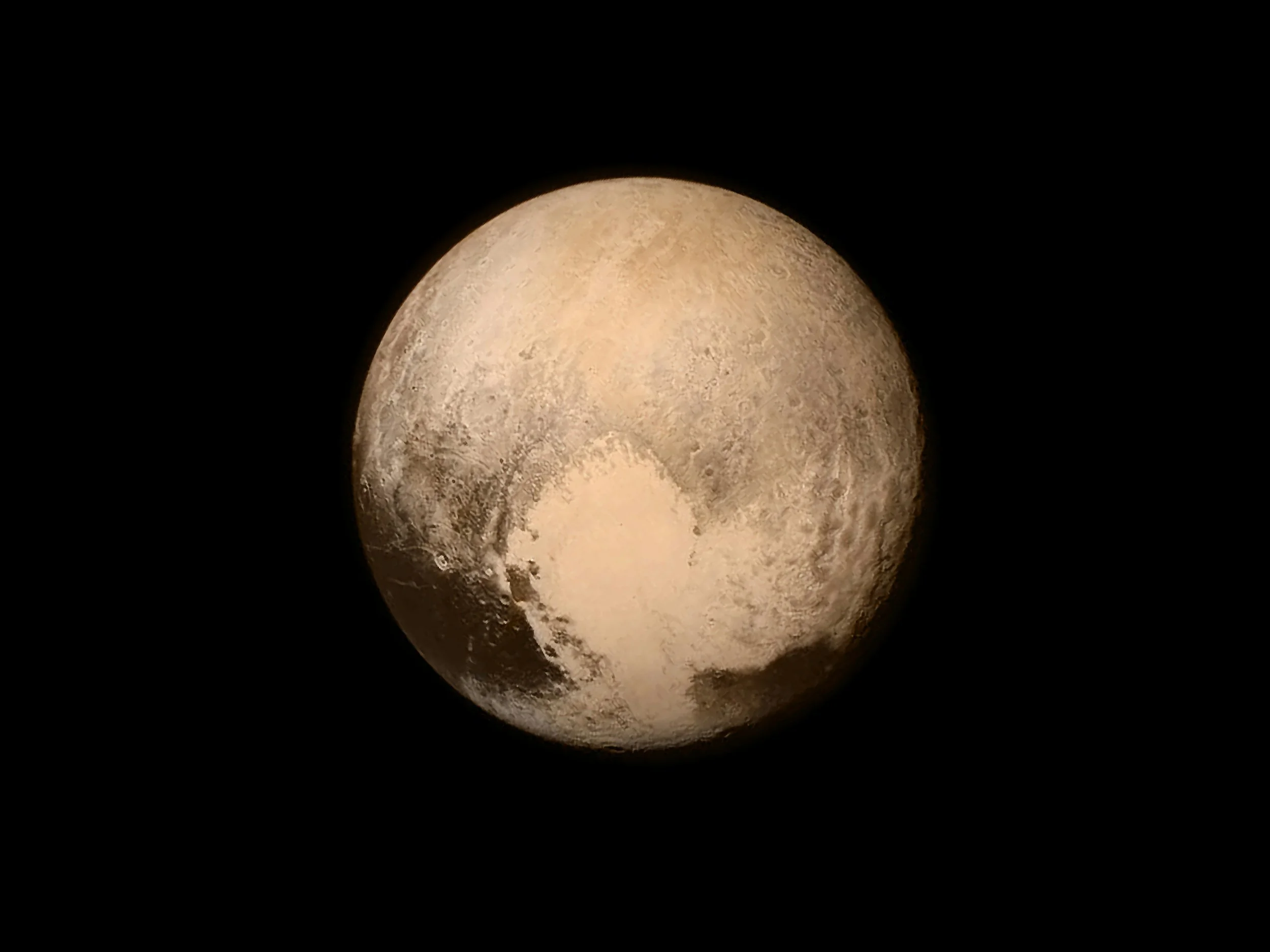
Pluto
Orbital characteristics:
Distance from star: 4.43-7.37 billion kilometres (30-49 astronomical units)
Orbital period: 247.94 years
Natural satellites: 5 (Charon, Styx, Nix, Kerberos, Hydra)
Space stations: 1 (Burney Station)
Physical characteristics:
Type: Cold dwarf icy planet
Mass: 0.00218 Earth masses
Radius: 1,188.3 kilometres (0.186 Earth radii)
Average temperature: 44 K (-229 °C)
Habitability: Uninhabitable
Societal:
Discovered: 1930
Colonised: 15 November 2122 (semi-permanent only)
Population: 100-300 (orbital only, no permanent surface population)
Any rational analysis would discount Pluto as a site for even temporary human settlement. It offers no economically-viable resources, and even in the spirit of scientific inquiry, other Kuiper Belt objects are more accessible. Nevertheless, the people of Earth have never forgotten Pluto’s lost status as “the ninth planet”, and when access to the Outer Solar System became possible, there were immediately campaigns and petitions for an expedition there. The First Plutonian Expedition aboard the URS Fram reached Pluto in 2117 after a journey of five-and-a-half months, becoming possibly the only voyage of exploration in history to be conducted out of mere sentimentality. The development of fast transports has reduced the journey to a less-onerous 52 days, and to appease public opinion, the World Union established Burney Station in orbit of Pluto in 2122. Between 100 and 300 scientific personnel work aboard the station, which supports exploration of Pluto and its moon system, and serves as a deep-space observation point for the rest of the Kuiper Belt and the Oort cloud. Assignment there is often thought to augur poor career prospects.