
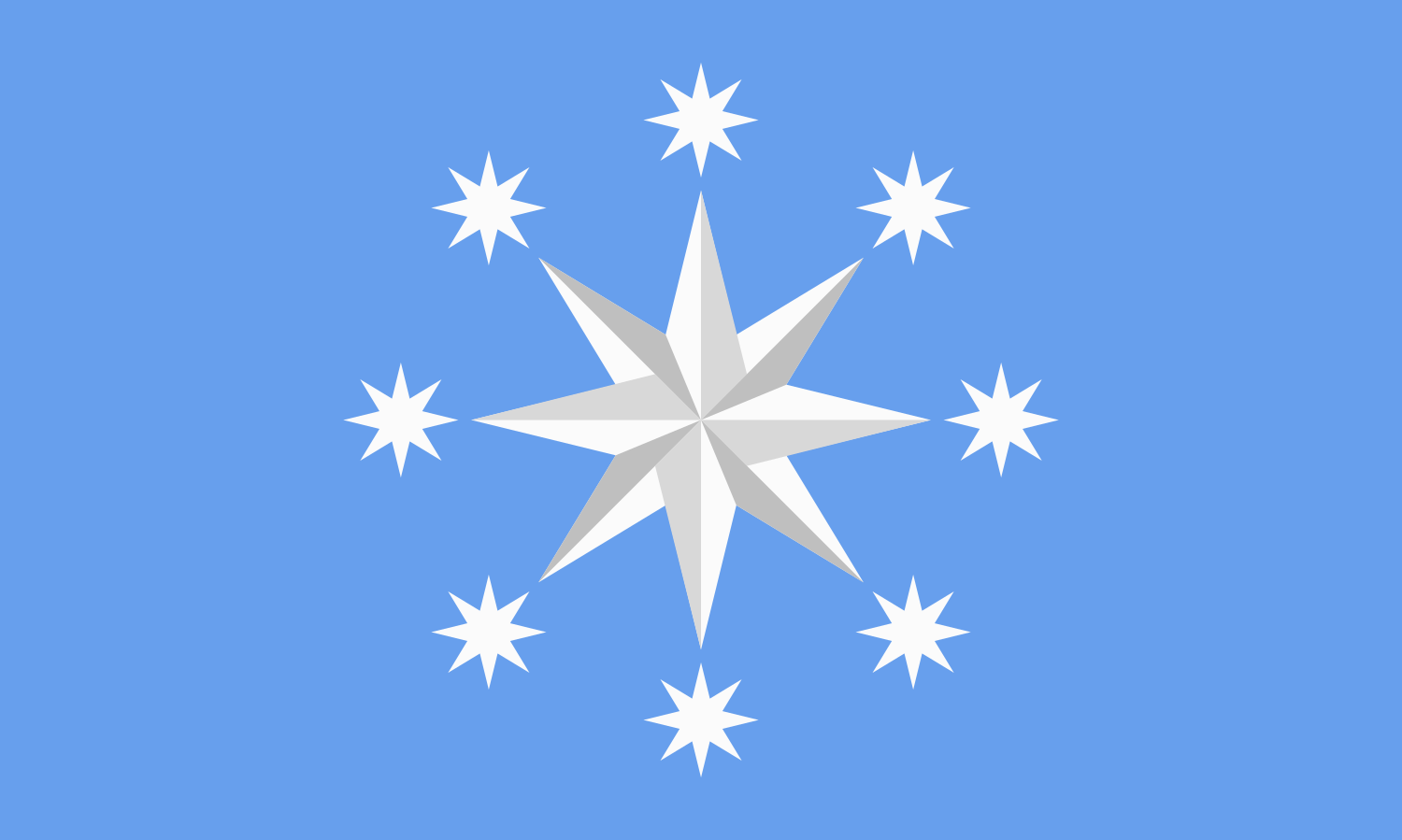
The World Union for Space Policy was founded in 2093 following the first successful flight of a fusion torch engine spacecraft to Mars. The World Union’s twelve founding members originally sought to ensure equitable access to the Solar System’s resources and prevent imperial competition over space. Since then, the World Union has expanded as an economic and political entity to include almost all of Earth’s nation-states, grown significantly in power and authority, and harmonised Earth’s economy and society to a degree unimagined by its founders.
To some, the World Union’s expansion is a welcome development in finally securing global cooperation, prosperity, and peace. To others, it is an unaccountable and byzantine institution that threatens the sovereignty and democracy of its member nations. The political status of the Solar System colonies, the rights of Observer Members, and the limits of the World Union’s powers to police space, remain open questions.
The World Union’s capital is the Geneva Complex, an extraterritorial stretch of land donated by the Government of Switzerland in 2096. It also maintains extensive offices in New York, London, Paris, Mombasa, New Delhi, and Jakarta.
Major World Union institutions
World Union Parliamentary Assembly
The democratically-elected element of the World Union, the Parliamentary Assembly approves the World Union’s budget, oversees other Union institutions, and debates and approves World Union legislation. It does not, however, have the right of legislative initiative, which lies with the Union Government or Union Council. The Parliamentary Assembly is apportioned on the basis of population, with elections every four years.
Member states that fulfil the World Union’s requirements for fully-democratic institutions and respect for human rights receive full voting rights in both the Parliamentary Assembly and the Council. Those that do not are granted Observer Membership, with access to the Union’s single market on a reduced tariff but without full free movement of goods, services, and capital, reduced access to structural and investment funds, and non-voting membership of the Parliamentary Assembly and the Council. This is intended to encourage these states to make the transition to full democracies while not stunting their economic development, but the practice has been denounced as coercive and colonialist. 22 of the World Union’s 197 member states hold Observer Membership, who sit in the Parliamentary Assembly as the cross-party Observer Caucus. Observer Membership and the Parliamentary Assembly’s lack of legislative initiative are among the most-criticised elements of the World Union for Space Policy, and the World Union’s sceptics regard them as representing a “democratic deficit” in the Union’s institutions.
Council of the World Union
Originally the World Union’s pre-eminent decision-making body, the Council of the World Union consists of the ambassadors of each member state. The Council defines the overall direction of the World Union and nominates the Secretary-General, whose appointment is approved by the Parliamentary Assembly. A President of the Council of the World Union is elected from its members to serve a term of seven years. The President is regarded by some political scholars as the Union’s head of state, but the President’s formal role is that of a figurehead for the Union and a “first among equals” in the Council.
The Council of the World Union is sometimes described as an upper house to the Parliamentary Assembly’s lower, though they are formally separate bodies. In the three decades since the World Union’s formation, power has largely ebbed from the Council to the Union Government: decisions taken by qualified majority votes in the Council were simply not quick enough for the rapidly-growing space economy, particularly following the Pirate Crisis of 2106, and its right to nominate the Secretary-General has largely become a formality.
World Union Government
The Union Government comprises the ministries and civil service of the World Union, and is led by the Secretary-General. The Union Government undertakes much of the Union’s day to day work and proposes bills for the Parliamentary Assembly and Council to consider. Originally a small secretariat intended to ensure the smooth implementation of the World Union’s laws and regulations, the massive importance that space has assumed to Earth’s economy, as well as the need to oversee colonies and combat piracy, means that the Union Government has become by far the most important element of the World Union for Space Policy. As of 2125, the Union Government consists of the Office of the Secretary-General and thirteen government departments
While the Union Government is formally separate from both the Parliamentary Assembly and Council (indeed, the government bench in the Parliamentary Assembly’s debating chamber is physically separated from the rest of the hemicycle), successive Secretaries-General have recognised that their office has become the World Union’s most visible institution. To that end, since the Pirate Crisis of 2106, the Secretary-General has by convention briefed the Parliamentary Assembly every Wednesday. While the Union Government was originally envisioned as a technocratic body removed from party politics, Secretaries-General have increasingly aligned themselves with the Parliamentary Assembly’s political blocs to both smooth the passage of legislation and reduce accusations of a “democratic deficit”: since 2112, nominations to the position of Secretary-General have been made by the Parliamentary Assembly’s parties, and the Council has conventionally voted taking into account the most recent parliamentary election.
World Union Courts of Justice
Owing its sheer number of overlapping jurisdictions, the World Union has no single supreme court. Its senior courts include the High Court, which responsible for hearing cases of criminal violation of space law; the Court of Interplanetary Affairs, the main civil court for affairs outside of Earth’s atmosphere; the Permanent Court of Justice, the main court for arbitrating matters of Union law on Earth; and the Union Court of Human Rights. The Courts of Justice maintain arms-length relationships with bodies like the International Criminal Court, the International Court of Justice, and the Permanent Court of Arbitration at the Hague in the Netherlands.
World Union Central Bank
Originally an investment bank to fund space initiatives in less-developed nations, the World Union Central Bank has absorbed many of the functions of earlier institutions like the International Monetary Fund and World Bank. It now serves as the independent central bank of the World Union, and works closely with the Department of Finance to set the World Union’s monetary policy and stabilise the Solar System’s economy.
The World Union Central Bank manages and administers the dey, the currency unit backed by the World Union for economic transactions in space. Given the massive economic importance assumed by space since 2093, many countries on Earth have pegged their currencies to the dey or adopted it outright. The name originated as an acronym for Dollar-Euro-Yen, referring to the currencies of the three economies that originally backed its establishment.